
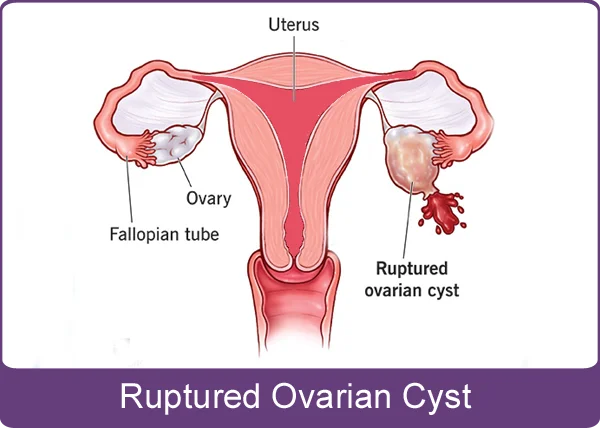
Ruptured Ovarian Cyst
A ruptured ovarian cyst occurs when a fluid-filled sac on or inside an ovary breaks open, releasing its contents into the surrounding pelvic area. Some ruptured cysts cause mild discomfort and resolve without surgery, while others can lead to severe pain or internal bleeding that requires urgent medical treatment.
Dr. Richa Arora Miglani, Minimally Invasive Gynaecological and Robotic Surgeon, provides gynaecological evaluation and surgical care for ovarian conditions. Women seeking ruptured ovarian cyst treatment in Shalimar Bagh can receive an assessment to determine the cause of symptoms and the most appropriate treatment.
Treatment depends on the type and size of the cyst, the severity of symptoms, the amount of bleeding, and the patient's overall condition. Options may include observation, medication for pain relief, hospital monitoring, or surgery when complications occur.
Important: Sudden, severe pelvic or abdominal pain, fainting, marked dizziness, heavy bleeding, or weakness requires immediate emergency assessment.
What Is a Ruptured Ovarian Cyst?
An ovarian cyst is a sac containing fluid or other material that develops in or on an ovary. Many ovarian cysts are functional cysts associated with the menstrual cycle and may disappear naturally. Occasionally, a cyst ruptures and releases its contents into the pelvic cavity.
A rupture may cause temporary irritation and pain. In some cases, blood vessels associated with the cyst bleed, resulting in significant internal bleeding. The severity depends on the cyst's type, the amount of bleeding, and other individual factors.
A ruptured ovarian cyst is different from ovarian torsion, in which the ovary twists around its supporting tissues and may lose its blood supply. Both conditions can cause sudden pelvic pain and require prompt assessment when symptoms are severe.
Symptoms of a Ruptured Ovarian Cyst
Symptoms vary depending on the cyst and whether internal bleeding has occurred. Common symptoms include:
-
Sudden pain in the lower abdomen or pelvis, often on one side.
-
Sharp or cramping pelvic pain that may fluctuate in intensity.
-
Abdominal tenderness or bloating.
-
Light vaginal bleeding or spotting in some cases.
-
Discomfort during certain physical activities or sexual intercourse.
-
Nausea or vomiting, particularly when pain is severe.
-
Weakness, dizziness, or fainting if significant internal bleeding occurs.
Severe pain, fainting, marked dizziness, or signs of blood loss require emergency medical assessment. These symptoms may indicate a serious complication or another urgent condition, such as ectopic pregnancy or ovarian torsion.
Causes and Risk Factors
Ovarian cysts can develop for several reasons. Factors associated with cyst formation or complications include:
-
Functional ovarian cysts: These develop as part of the menstrual cycle and commonly resolve naturally.
-
Corpus luteum cysts: These form after ovulation and may occasionally bleed or rupture.
-
Endometriosis-related cysts: Also known as endometriomas, these are associated with endometriosis.
-
Larger ovarian cysts: Depending on their type and characteristics, some cysts are more likely to cause symptoms or complications.
-
Physical activity or sexual intercourse: In some cases, symptoms begin during or after activity, although many ruptures occur without an identifiable trigger.
A ruptured cyst does not always require surgery. The appropriate treatment depends on the patient's symptoms, examination findings, and whether bleeding or other complications are present.
Diagnosis of a Ruptured Ovarian Cyst
Prompt assessment helps identify the cause of pelvic pain and determine whether urgent treatment is needed. The evaluation may include:
-
Medical history: Reviewing pain onset, menstrual history, pregnancy possibility, and previous ovarian cysts.
-
Physical examination: Checking abdominal tenderness and other signs that may indicate complications.
-
Pelvic ultrasound: Assessing the ovaries, identifying cysts, and looking for fluid or blood in the pelvis.
-
Pregnancy testing: Helping exclude ectopic pregnancy, which can cause similar symptoms.
-
Blood tests: Checking haemoglobin levels and other indicators when internal bleeding or infection is suspected.
-
Additional investigations: Further imaging or assessment may be necessary if the diagnosis remains uncertain.
The amount of free fluid seen on ultrasound, the patient's vital signs, pain severity, and blood test results help guide treatment decisions.
Treatment Options for a Ruptured Ovarian Cyst
Treatment depends on the severity of symptoms, the type of cyst, and the patient's clinical condition.
1. Observation and Monitoring
Many uncomplicated cyst ruptures can be managed without surgery. If the patient is stable and there is no evidence of significant ongoing bleeding, the healthcare professional may recommend observation, appropriate pain relief, and follow-up.
Monitoring may include repeat examinations, blood tests, or ultrasound depending on the initial findings.
2. Medication and Pain Management
Pain relief may be recommended for patients with uncomplicated cyst rupture. The medication should be selected according to the patient's medical history, pregnancy status, and bleeding risk.
Medication can help manage symptoms, but it does not replace emergency evaluation when serious complications are suspected.
3. Laparoscopic Surgery
Laparoscopic surgery, also known as keyhole surgery, may be recommended if there is significant bleeding, persistent severe pain, diagnostic uncertainty, or concern about the nature of the cyst.
Through small abdominal incisions, the surgeon can inspect the pelvis, control bleeding, and remove the cyst when necessary. Preserving healthy ovarian tissue is generally an important consideration whenever clinically feasible.
4. Emergency Surgery
If the cyst rupture causes substantial internal bleeding or the patient becomes medically unstable, emergency surgery may be required. The surgical approach depends on the urgency, the amount of bleeding, and the condition of the ovary.
In selected cases, removal of the ovary may be necessary, but the decision depends on the clinical findings and should be individualized.
Ruptured Ovarian Cyst vs. Twisted Ovary
The terms “ruptured ovarian cyst” and “twisted ovarian cyst” describe different conditions. A cyst can rupture, while ovarian torsion occurs when the ovary twists around its supporting tissues, potentially compromising its blood supply. An ovarian cyst or mass can increase the risk of torsion.
Ruptured ovarian cyst
A cyst breaks open and releases fluid or blood into the pelvic cavity. Treatment may involve observation or surgery, depending on bleeding and symptoms.
Ovarian torsion
The ovary twists around its supporting tissues. It is a time-sensitive emergency that commonly requires urgent surgical evaluation and treatment.
Both conditions can cause sudden pelvic pain. Symptoms alone cannot reliably distinguish them, so urgent assessment is important when pain is severe or persistent.
Possible Complications
Although many ruptured cysts resolve without major problems, complications can include:
-
Internal bleeding.
-
Significant blood loss requiring hospital treatment.
-
Persistent or worsening pelvic pain.
-
Infection in certain clinical circumstances.
-
Need for surgical treatment.
-
Delayed diagnosis of another condition causing similar symptoms.
Prompt assessment helps identify complications and reduces the risk associated with delayed treatment.
Recovery After Ruptured Ovarian Cyst Treatment
Recovery depends on the severity of the rupture and the treatment required. Patients managed without surgery may recover over several days, while recovery after surgery may take longer.
General recovery recommendations may include:
-
Follow the treating clinician's instructions regarding medication and activity.
-
Rest as needed and gradually return to normal activities.
-
Avoid strenuous exercise until pain improves and medical advice confirms it is safe.
-
Attend recommended follow-up appointments and imaging.
-
Seek reassessment if pain persists, returns, or becomes more severe.
Seek emergency care for fainting, severe dizziness, sudden worsening pain, heavy bleeding, or marked weakness.
Why Consult Dr. Richa Arora Miglani?
Dr. Richa Arora Miglani specializes in minimally invasive gynaecological surgery, laparoscopic procedures, robotic-assisted surgery, and the management of complex gynaecological conditions.
Women seeking ruptured ovarian cyst treatment in Shalimar Bagh can consult for assessment and guidance on appropriate management options. Treatment planning focuses on identifying the cause of symptoms, assessing complications, and preserving healthy ovarian tissue whenever possible and medically appropriate.
If severe symptoms suggest internal bleeding or ovarian torsion, patients should go directly to an emergency department rather than wait for a routine appointment.
Frequently Asked Questions
1. What is a ruptured ovarian cyst?
A ruptured ovarian cyst occurs when a fluid-filled sac on or inside the ovary breaks open. It may cause sudden pelvic pain and, in some cases, internal bleeding.
2. Is a ruptured ovarian cyst dangerous?
Some ruptures are uncomplicated and resolve with monitoring. Others can cause significant internal bleeding or severe pain and require emergency treatment. The severity of symptoms and clinical findings determine the urgency of care.
3. Does every ruptured ovarian cyst require surgery?
No. Many uncomplicated cases can be managed with observation and appropriate pain relief. Surgery may be needed for significant bleeding, persistent severe pain, or concern about another underlying condition.
4. How is a ruptured ovarian cyst diagnosed?
Evaluation may include a pelvic examination, ultrasound, pregnancy testing, and blood tests. These help assess the cyst, check for internal bleeding, and exclude conditions such as ectopic pregnancy or ovarian torsion.
5. What is the difference between a ruptured cyst and ovarian torsion?
A ruptured cyst breaks open and releases its contents, whereas ovarian torsion occurs when the ovary twists around its supporting tissues. Both can cause sudden pain, but torsion often requires urgent surgery to protect ovarian function.
6. Can a ruptured ovarian cyst affect fertility?
Many uncomplicated ruptured cysts do not cause lasting fertility problems. The impact depends on the type of cyst, the severity of complications, and whether surgery or removal of ovarian tissue is necessary.
7. How long does recovery take after a ruptured ovarian cyst?
Recovery varies according to the severity of the rupture and whether surgery was needed. Uncomplicated cases may improve over several days, while surgical recovery can take longer. Persistent or worsening symptoms require medical reassessment.
8. Where can I seek ruptured ovarian cyst treatment in Shalimar Bagh?
Dr. Richa Arora Miglani provides gynaecological evaluation and surgical care for ovarian conditions. For sudden severe pelvic pain, fainting, marked dizziness, or suspected internal bleeding, seek emergency care immediately rather than waiting for a routine consultation.
Category : Ruptured Ovarian Cyst