
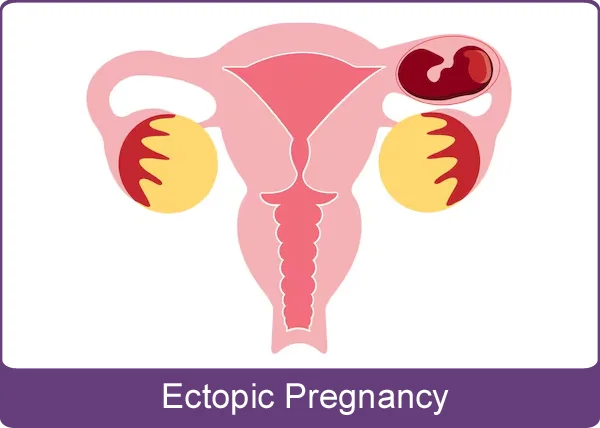
Ectopic Pregnancy
An ectopic pregnancy occurs when a fertilized egg implants outside the uterus, most commonly in a fallopian tube. Because the pregnancy cannot develop normally in this location, early diagnosis and appropriate medical care are essential. If an ectopic pregnancy grows and ruptures, it can cause serious internal bleeding and become life-threatening.
Dr. Richa Arora Miglani, Minimally Invasive Gynaecological and Robotic Surgeon, provides gynaecological evaluation and treatment planning for conditions requiring urgent or specialized care. Women seeking ectopic pregnancy treatment in Shalimar Bagh should receive prompt medical assessment if an ectopic pregnancy is suspected.
Treatment depends on the patient's symptoms, ultrasound findings, pregnancy hormone levels, and overall condition. Options may include close monitoring in carefully selected cases, medication, or surgery. A suspected ectopic pregnancy requires urgent medical assessment and should never be managed through self-treatment.
What Is an Ectopic Pregnancy?
In a normal pregnancy, the fertilized egg implants inside the uterus. In an ectopic pregnancy, implantation occurs outside the uterine cavity, most often in a fallopian tube. Less commonly, it may occur in an ovary, the cervix, or another location outside the uterus.
The pregnancy cannot develop safely in these locations. If the tissue grows and causes rupture, significant internal bleeding may occur. Early assessment helps the medical team determine the pregnancy's location and select the safest treatment.
Symptoms of Ectopic Pregnancy
Symptoms may develop during the early weeks of pregnancy, although some women initially have no noticeable symptoms.
Common signs include:
-
Pain in the lower abdomen or pelvis, often on one side.
-
Vaginal bleeding or brown discharge.
-
A missed period or a positive pregnancy test.
-
Pain or discomfort while urinating or passing stools.
-
Shoulder-tip pain, which can indicate internal bleeding.
-
Dizziness, weakness, or fainting in severe cases.
Medical emergency: Sudden, severe abdominal pain, shoulder-tip pain, fainting, marked dizziness, or heavy bleeding may indicate a ruptured ectopic pregnancy. Go to the nearest emergency department immediately. Do not wait for a routine appointment.
click here />
NHS
+1
Causes and Risk Factors
An ectopic pregnancy can occur even when a woman has no known risk factors. Factors associated with a higher risk include:
-
Previous ectopic pregnancy.
-
Previous fallopian tube surgery or damage.
-
Pelvic inflammatory disease or certain reproductive tract infections.
-
Fertility treatment, including assisted reproductive techniques.
-
Pregnancy occurring despite an intrauterine contraceptive device.
-
Smoking.
-
Increasing maternal age.
Having a risk factor does not mean an ectopic pregnancy will occur. Early assessment of concerning symptoms is important regardless of medical history.
click here />
ACOG
+1
Diagnosis of Ectopic Pregnancy
Early diagnosis helps doctors determine the safest course of treatment. The evaluation may include:
-
Pregnancy testing: Confirms whether pregnancy is likely.
-
Transvaginal ultrasound: Helps identify the location of the pregnancy.
-
Blood tests: Quantitative beta-hCG measurements may be repeated to assess changes in pregnancy hormone levels.
-
Clinical examination: Symptoms, blood pressure, pulse, and other findings help assess the patient's condition.
-
Further investigation: Additional assessment may be required if the pregnancy location remains uncertain.
Sometimes an early scan cannot immediately confirm where the pregnancy is located. Repeat blood tests and ultrasound examinations may be necessary, provided the patient is clinically stable and has clear instructions about when to seek emergency care.
click here />
ACOG
+1
Treatment Options for Ectopic Pregnancy
Treatment depends on the patient's stability, symptoms, ultrasound findings, pregnancy hormone levels, and ability to attend follow-up appointments.
1. Expectant Management
In carefully selected cases, when the patient is stable and the ectopic pregnancy appears to be resolving, the doctor may recommend close monitoring. This involves repeat blood tests and sometimes ultrasound examinations until the pregnancy hormone level returns to a non-pregnant range.
Monitoring is not suitable for everyone and requires reliable follow-up because complications can still develop.
2. Medical Treatment
Methotrexate may be recommended for selected patients when the ectopic pregnancy has not ruptured and the clinical findings meet treatment criteria. The medication stops the pregnancy tissue from growing.
Follow-up blood tests are essential to confirm that treatment is working. Some patients may require another dose or surgery if the treatment is unsuccessful. Methotrexate also requires specific precautions, including guidance about when it is safe to try for another pregnancy.
3. Laparoscopic Surgery
Laparoscopic surgery, also called keyhole surgery, may be used to remove an ectopic pregnancy through small abdominal incisions. Depending on the findings, the surgeon may remove the affected fallopian tube or, in selected cases, remove the pregnancy while preserving the tube.
The choice depends on the extent of damage, bleeding, condition of the other fallopian tube, and future fertility considerations.
4. Emergency Surgery
If the fallopian tube has ruptured or there is significant internal bleeding, emergency surgery is necessary. The surgical approach is selected according to the patient's condition and the urgency of treatment.
An ectopic pregnancy cannot develop safely into a normal pregnancy, and delaying necessary treatment can be life-threatening.
click here />
NHS
+2
Recovery After Ectopic Pregnancy Treatment
Recovery depends on whether treatment involved medication, laparoscopic surgery, or emergency open surgery. Follow-up care is essential after every treatment option.
Patients may be advised to:
-
Attend all scheduled blood tests until pregnancy hormone levels have resolved.
-
Follow medication and wound-care instructions.
-
Avoid strenuous activity until medically cleared.
-
Seek prompt medical attention if pain, bleeding, dizziness, or weakness worsens.
-
Discuss emotional support and future pregnancy planning with their healthcare provider.
Experiencing an ectopic pregnancy can also be emotionally difficult. Allowing time to recover and seeking support when needed can be an important part of care.
click here />
NHS
+1
Future Pregnancy After an Ectopic Pregnancy
Many women can become pregnant again after an ectopic pregnancy, even if one fallopian tube has been removed. However, future fertility depends on individual circumstances, including the condition of the remaining tube and other reproductive health factors.
A subsequent pregnancy should be assessed early by a healthcare professional. Early blood tests and ultrasound may be recommended to confirm that the pregnancy is developing inside the uterus.
The timing of trying to conceive again should be discussed with the treating doctor, particularly after methotrexate treatment, because a waiting period is recommended.
click here />
NHS
+1
Why Consult Dr. Richa Arora Miglani?
Dr. Richa Arora Miglani specializes in minimally invasive gynaecological surgery, laparoscopic procedures, robotic-assisted surgery, and emergency gynaecological care.
Patients seeking ectopic pregnancy treatment in Shalimar Bagh can consult for appropriate assessment and guidance on available treatment options. Suspected ectopic pregnancy requires urgent medical evaluation, and patients with signs of rupture must go directly to an emergency department rather than wait for an outpatient consultation.
Frequently Asked Questions
1. What is an ectopic pregnancy?
An ectopic pregnancy occurs when a fertilized egg implants outside the uterus, most commonly in a fallopian tube. It cannot develop safely and requires medical assessment and appropriate treatment.
2. What are the early warning signs of ectopic pregnancy?
Early signs may include one-sided lower abdominal pain, vaginal bleeding, a missed period, or discomfort while urinating or passing stools. Some women have no symptoms initially, so medical assessment is important if ectopic pregnancy is suspected.
3. Can an ectopic pregnancy be treated without surgery?
Yes. Selected patients may be suitable for methotrexate medication or closely supervised expectant management. The appropriate option depends on clinical stability, test results, ultrasound findings, and the ability to attend follow-up.
4. Is laparoscopic surgery used for ectopic pregnancy?
Yes. Laparoscopic surgery is commonly used when surgery is required and the patient's condition allows it. Emergency open surgery may be necessary in some cases, particularly when severe internal bleeding is suspected.
5. Is ectopic pregnancy a medical emergency?
It can become a life-threatening emergency if the pregnancy ruptures and causes internal bleeding. Sudden severe abdominal pain, shoulder-tip pain, fainting, or significant dizziness requires immediate emergency medical attention.
6. Can I get pregnant after ectopic pregnancy treatment?
Many women can have a successful future pregnancy. Fertility depends on individual reproductive health and the condition of the remaining fallopian tube. Early medical assessment in the next pregnancy is recommended.
7. How long does recovery take after ectopic pregnancy surgery?
Recovery varies according to the type of surgery and whether complications occurred. Laparoscopic surgery generally involves a shorter recovery than open surgery, but the surgeon should provide individualized guidance on activity and follow-up.
8. Where can I seek ectopic pregnancy treatment in Shalimar Bagh?
Dr. Richa Arora Miglani provides gynaecological evaluation and surgical care for relevant conditions. If you suspect an ectopic pregnancy, seek urgent medical assessment; if you have severe pain, fainting, or signs of internal bleeding, go directly to the nearest emergency department.
Category : Ectopic Pregnancy