
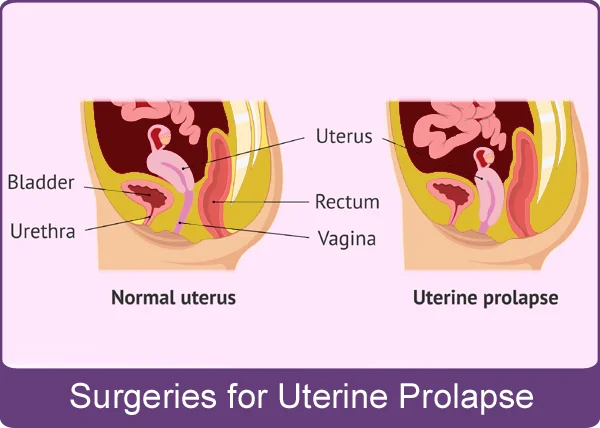
Surgeries for Uterine Prolapse
Uterine prolapse is a condition in which the uterus descends from its normal position into the vaginal canal due to weakening of the pelvic floor muscles and supporting tissues. It can cause pelvic pressure, a sensation of heaviness, a vaginal bulge, and difficulties with bladder or bowel function. The severity of symptoms varies from one woman to another, and treatment depends on individual needs.
Dr. Richa Arora Miglani, Minimally Invasive Gynaecological and Robotic Surgeon, provides personalized evaluation and treatment options for women experiencing uterine prolapse. Patients seeking uterine prolapse treatment in Shalimar Bagh can receive an assessment to determine whether non-surgical management or a surgical procedure may be appropriate.
The goal of treatment is to relieve bothersome symptoms, improve pelvic support, and help women return to their daily activities comfortably. Depending on the degree of prolapse, age, general health, reproductive plans, and personal preferences, treatment may involve pelvic floor exercises, a vaginal pessary, or surgery.
What Is Uterine Prolapse?
Uterine prolapse occurs when the muscles, ligaments, and connective tissues that support the uterus become weakened or stretched. As a result, the uterus moves downward into the vagina and, in more advanced cases, may protrude beyond the vaginal opening.
Common factors associated with uterine prolapse include vaginal childbirth, ageing, menopause-related tissue changes, chronic constipation, persistent coughing, obesity, and repeated heavy lifting. Previous pelvic surgery and individual differences in connective tissue strength may also contribute.
Uterine prolapse can range from mild, with few noticeable symptoms, to more advanced prolapse that affects everyday comfort and function. A gynaecological examination helps determine the severity and identify the most suitable treatment.
Symptoms of Uterine Prolapse
Women with uterine prolapse may experience symptoms such as:
-
A feeling of heaviness or pressure in the lower abdomen or pelvis.
-
A bulge or lump inside the vagina or protruding from the vaginal opening.
-
Discomfort that becomes more noticeable after standing or walking for long periods.
-
Difficulty emptying the bladder or a feeling of incomplete urination.
-
Urinary leakage or increased urinary frequency in some cases.
-
Constipation or difficulty passing stools.
-
Lower back discomfort or a dragging sensation in the pelvis.
-
Discomfort during sexual activity.
Some women have mild prolapse without noticeable symptoms. If symptoms interfere with daily life or a vaginal bulge develops, a medical assessment can help clarify the diagnosis and available treatment options.
When Is Surgery for Uterine Prolapse Recommended?
Surgery may be considered when uterine prolapse causes persistent or significant symptoms and non-surgical treatments do not provide adequate relief, or when a patient prefers surgical management after discussing the options.
Surgical treatment may be considered for women who:
-
Experience a bothersome vaginal bulge or persistent pelvic pressure.
-
Have moderate to severe uterine prolapse affecting daily activities.
-
Experience bladder or bowel difficulties associated with prolapse.
-
Have symptoms that remain troublesome despite using a vaginal pessary or other conservative measures.
-
Need pelvic floor reconstruction to improve support.
-
Want to discuss uterus-preserving surgical options or surgery involving removal of the uterus.
Not every patient with uterine prolapse requires an operation. The decision should be made after considering symptoms, examination findings, medical history, and the patient's preferences.
Types of Uterine Prolapse Surgery
The appropriate procedure depends on the severity of prolapse, the condition of the pelvic floor, previous surgeries, reproductive goals, and overall health.
1. Uterus-Preserving Surgery
Some procedures aim to restore pelvic support while retaining the uterus. These may be suitable for women who wish to preserve their uterus and meet the clinical criteria for reconstructive surgery.
2. Hysterectomy With Pelvic Support Repair
For selected patients, removal of the uterus may be recommended as part of prolapse surgery. When hysterectomy is performed for uterine prolapse, it is important to address vaginal and pelvic support as appropriate to reduce the risk of future vault prolapse.
3. Vaginal Prolapse Repair
Some procedures are performed through the vagina to repair weakened supporting tissues and improve pelvic organ support. The technique depends on the type and extent of prolapse.
4. Sacrocolpopexy or Vault Suspension
For suitable patients, sacrocolpopexy may be considered to support the top of the vagina, particularly when vaginal vault prolapse is present or anticipated following hysterectomy. The benefits, risks, and use of surgical mesh should be discussed before surgery.
5. Minimally Invasive or Robotic-Assisted Surgery
Selected prolapse procedures may be performed using laparoscopic or robotic-assisted techniques. These approaches use small abdominal incisions and may offer recovery advantages for some patients, although suitability and outcomes vary by procedure and individual circumstances.
Diagnosis and Evaluation Before Surgery
Before recommending uterine prolapse surgery, the surgeon evaluates the patient's symptoms, medical history, and pelvic support.
The assessment may include:
-
Pelvic examination: To identify the affected organs and determine the extent of prolapse.
-
Symptom assessment: To understand how prolapse affects daily activities, urinary function, bowel movements, and sexual comfort.
-
Bladder evaluation: Additional testing may be recommended if urinary symptoms are present.
-
Medical history review: Previous pregnancies, childbirth experiences, pelvic surgeries, medications, and other health conditions are considered.
-
Treatment discussion: Non-surgical options, uterus-preserving procedures, hysterectomy, and reconstructive techniques are reviewed when appropriate.
Additional investigations may be advised depending on symptoms and the planned operation.
Benefits of Uterine Prolapse Surgery
When surgery is appropriate, it may provide several benefits:
-
Improved pelvic support: Helps restore the position of the uterus or other affected pelvic organs.
-
Relief from pressure: May reduce the sensation of heaviness and vaginal bulging.
-
Better daily comfort: Can make walking, standing, and routine activities more comfortable.
-
Individualized treatment: The surgical approach can be selected according to the patient's anatomy and preferences.
-
Reconstructive options: Some procedures aim to preserve the uterus, while others include hysterectomy when indicated.
-
Improved quality of life: Successful treatment may reduce the impact of prolapse symptoms on everyday living.
Surgery cannot guarantee that every symptom will disappear, and prolapse may recur. Urinary, bowel, or sexual symptoms may also need separate assessment and treatment.
Risks and Possible Complications
As with other surgical procedures, uterine prolapse surgery has potential risks. These may include:
-
Bleeding or infection.
-
Injury to the bladder, bowel, ureters, or surrounding structures.
-
Blood clots or anaesthesia-related complications.
-
Difficulty passing urine or new or persistent urinary symptoms.
-
Constipation or other bowel-related problems.
-
Pain during sexual activity.
-
Recurrence of prolapse or development of prolapse in another pelvic compartment.
-
Risks associated with mesh, if a mesh-based procedure is selected.
-
Need for additional treatment or further surgery.
The specific risks vary according to the procedure and the patient's health. A consultation should include a discussion of expected benefits, alternatives, recovery, and potential complications.
Recovery After Uterine Prolapse Surgery
Recovery depends on the procedure performed, the surgical approach, and the patient's overall health. Patients should follow their surgeon's instructions carefully.
General recovery guidance may include:
-
Take prescribed medications and follow wound-care instructions.
-
Begin gentle walking as advised.
-
Avoid heavy lifting and strenuous exercise until cleared by the surgeon.
-
Follow medical advice about driving, returning to work, and resuming normal activities.
-
Avoid vaginal intercourse for the period recommended by the surgeon.
-
Attend follow-up visits to monitor healing and pelvic support.
Seek medical attention for fever, heavy bleeding, worsening pain, difficulty passing urine, or unusual wound discharge. Sudden chest pain or breathlessness requires emergency medical care.
Why Choose Dr. Richa Arora Miglani?
Dr. Richa Arora Miglani specializes in minimally invasive gynaecological surgery, robotic-assisted procedures, and the management of complex gynaecological conditions. Her experience in laparoscopic and reconstructive gynaecological surgery supports individualized evaluation and treatment planning.
Women seeking uterine prolapse treatment in Shalimar Bagh can discuss their symptoms, available surgical options, uterus-preserving approaches where appropriate, and expected recovery. Treatment recommendations are based on clinical findings, medical history, and personal preferences.
When Should You Consult a Gynaecologist?
Consider a consultation if you notice a vaginal bulge, persistent pelvic heaviness, pressure while standing, or bladder and bowel difficulties that may be related to prolapse. Early evaluation helps determine the severity of the condition and whether pelvic floor exercises, a vaginal pessary, observation, or surgery is suitable.
Frequently Asked Questions
1. What is the best treatment for uterine prolapse?
The best treatment depends on the severity of prolapse, symptoms, general health, and personal preferences. Mild cases may be managed with pelvic floor exercises or a vaginal pessary, while surgery may be considered for more troublesome symptoms.
2. When does uterine prolapse require surgery?
Surgery may be recommended when prolapse significantly affects daily activities, causes a bothersome vaginal bulge, or does not improve sufficiently with conservative treatment. The decision follows an individual clinical assessment.
3. Can uterine prolapse surgery be performed without removing the uterus?
Yes. Uterus-preserving procedures are available for selected patients. Whether these procedures are suitable depends on the type and severity of prolapse, reproductive goals, and other medical factors.
4. Is uterine prolapse surgery possible through minimally invasive techniques?
Some prolapse operations can be performed laparoscopically or with robotic assistance. Other procedures may be performed vaginally or through an open approach. The surgeon recommends a technique based on the patient's condition and the procedure required.
5. How long does recovery take after uterine prolapse surgery?
Recovery varies depending on the operation and individual healing. Many patients need several weeks to return gradually to normal activities. Heavy lifting, strenuous exercise, and vaginal intercourse may need to be avoided until the surgeon confirms it is safe.
6. Can uterine prolapse return after surgery?
Yes. Prolapse can recur even after surgery. The likelihood depends on factors such as the procedure performed, pelvic tissue strength, and individual health. Follow-up care helps monitor recovery and identify persistent or returning symptoms.
7. Is uterine prolapse surgery safe?
Uterine prolapse surgery is commonly performed when clinically indicated, but no operation is free from risk. Potential complications include bleeding, infection, urinary problems, injury to nearby organs, and recurrence. Your surgeon can explain the risks relevant to your circumstances.
8. Where can I get uterine prolapse treatment in Shalimar Bagh?
You can consult Dr. Richa Arora Miglani for evaluation of uterine prolapse and guidance on suitable treatment options. Contact the clinic to confirm appointment availability and consultation details.
Category : Surgeries for Uterine Prolapse