
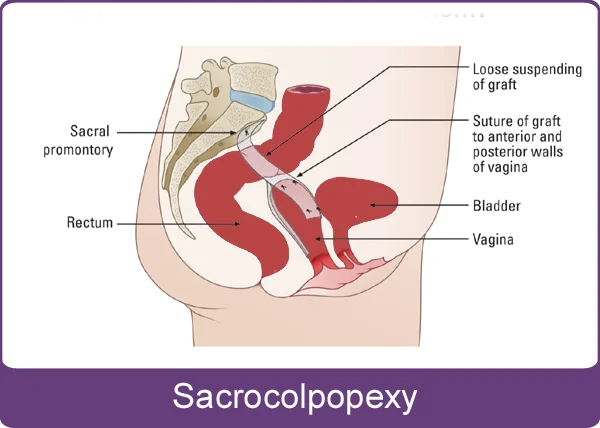
Sacrocolpopexy
Sacrocolpopexy is a reconstructive surgical procedure used to treat vaginal vault prolapse, a condition in which the top of the vagina loses support and descends into the vaginal canal. It commonly occurs after a hysterectomy, although pelvic support problems can also develop due to childbirth, ageing, weakened pelvic floor tissues, or other factors.
Dr. Richa Arora Miglani, Minimally Invasive Gynaecological and Robotic Surgeon, provides individualized evaluation and surgical care for women experiencing pelvic organ prolapse. Patients seeking sacrocolpopexy in Shalimar Bagh can discuss suitable treatment options based on their symptoms, medical history, pelvic examination, and overall health.
The goal of sacrocolpopexy is to restore vaginal support, reduce prolapse symptoms, and improve daily comfort. Depending on the clinical situation, the procedure may be performed using laparoscopic, robotic-assisted, or open surgical techniques.
What Is Sacrocolpopexy?
Sacrocolpopexy, also known as vault suspension, is a surgical procedure that supports the vaginal apex by attaching it to a strong ligamentous structure near the sacrum at the base of the spine. A surgical mesh is commonly used to provide support between the vagina and the sacrum.
This procedure is often recommended for women with vaginal vault prolapse, particularly when the upper part of the vagina descends following a previous hysterectomy. The appropriate surgical approach depends on the severity of prolapse, previous surgeries, individual health factors, and patient preferences.
Symptoms of Vaginal Vault Prolapse
Vaginal vault prolapse can cause symptoms that affect daily activities and quality of life. Common symptoms include:
-
A feeling of heaviness, pressure, or fullness in the pelvis.
-
A bulge or tissue protruding from the vagina.
-
Discomfort while walking, standing, or performing physical activities.
-
Difficulty emptying the bladder or frequent urinary symptoms.
-
Constipation or difficulty passing stools in some cases.
-
Discomfort during sexual activity.
-
Symptoms that become more noticeable after prolonged standing.
Symptoms can vary from mild to severe. Women experiencing a vaginal bulge, persistent pelvic pressure, or difficulty with bladder or bowel function should seek a gynaecological assessment.
When Is Sacrocolpopexy Recommended?
Sacrocolpopexy may be considered when vaginal vault prolapse causes bothersome symptoms or significantly affects everyday life. It may be suitable for patients who:
-
Have vaginal vault prolapse following hysterectomy.
-
Experience persistent pelvic pressure or a vaginal bulge.
-
Have prolapse that affects walking, exercise, or routine activities.
-
Need surgical correction after an assessment of pelvic support.
-
Prefer a reconstructive procedure that aims to preserve vaginal length and anatomy where appropriate.
-
Have not achieved sufficient symptom relief with non-surgical treatment options.
Not every patient requires surgery. Depending on symptom severity and personal preference, alternatives may include pelvic floor exercises, a vaginal pessary, or observation with follow-up.
How Is Sacrocolpopexy Performed?
Treatment begins with a detailed evaluation to confirm the type and severity of prolapse. If surgery is appropriate, the surgeon discusses the procedure, expected outcomes, possible complications, and alternative treatments.
The main steps may include:
-
Anaesthesia: The procedure is usually performed under general anaesthesia.
-
Surgical access: Small abdominal incisions may be used for laparoscopic or robotic-assisted surgery. An open approach may be appropriate in selected cases.
-
Vaginal support: The surgeon attaches surgical mesh to the vaginal apex or relevant vaginal support tissues.
-
Vault suspension: The mesh is secured to a strong supporting ligament over the sacrum to help restore vaginal position.
-
Closure and recovery: The surgeon checks the repair and closes the surgical incisions.
The exact technique depends on the patient's anatomy, previous surgeries, medical condition, and the surgeon's assessment. Mesh-related risks and alternatives should be discussed before proceeding.
Benefits of Sacrocolpopexy
When appropriately selected, sacrocolpopexy may offer several benefits:
-
Restores vaginal support: Helps correct descent of the vaginal apex.
-
Relieves prolapse symptoms: May reduce pelvic pressure and the sensation of a vaginal bulge.
-
Supports daily activities: Improvement in symptoms may make routine movement and exercise more comfortable.
-
Preserves vaginal anatomy: The procedure aims to maintain vaginal length and function when suitable.
-
Offers minimally invasive options: Laparoscopic or robotic-assisted approaches may be possible for selected patients.
-
Provides reconstructive treatment: Addresses the underlying support problem rather than only managing symptoms.
Results vary, and prolapse can recur. Surgery does not guarantee complete relief of every urinary, bowel, or pelvic symptom.
Risks and Possible Complications
As with any surgery, sacrocolpopexy has potential risks. These may include:
-
Bleeding or infection.
-
Injury to nearby organs, blood vessels, bladder, bowel, or ureters.
-
Blood clots or anaesthesia-related complications.
-
Difficulty passing urine or new or persistent urinary symptoms.
-
Constipation or bowel-related symptoms.
-
Mesh exposure or erosion into nearby tissues.
-
Pain during sexual activity.
-
Persistent or recurrent prolapse.
-
Need for further treatment or additional surgery.
A consultation helps determine whether the expected benefits outweigh the risks for an individual patient. Mesh use, alternatives, and long-term follow-up should be discussed as part of informed consent.
Recovery After Sacrocolpopexy
Recovery depends on the surgical technique, general health, and whether additional procedures are performed. Patients undergoing minimally invasive surgery may recover differently from those having open surgery.
General recovery guidance may include:
-
Follow the surgeon's instructions regarding wound care and medication.
-
Walk gently as advised to support circulation and recovery.
-
Avoid heavy lifting and strenuous activity until medically cleared.
-
Follow recommendations regarding driving, exercise, and returning to work.
-
Avoid vaginal intercourse for the period advised by the surgeon.
-
Attend follow-up appointments to assess healing and pelvic support.
Seek prompt medical advice for fever, heavy bleeding, worsening abdominal pain, difficulty passing urine, or unusual wound discharge. Sudden chest pain or breathlessness requires emergency medical attention.
Why Choose Dr. Richa Arora Miglani?
Dr. Richa Arora Miglani specializes in minimally invasive gynaecological surgery, robotic-assisted procedures, and complex gynaecological conditions. Her training and surgical experience support individualized treatment planning for women who require pelvic reconstructive surgery.
Patients considering sacrocolpopexy in Shalimar Bagh can discuss their symptoms, suitable surgical approaches, recovery expectations, and potential risks during a consultation. The recommended treatment plan is based on clinical findings and each patient's goals.
When Should You Consult a Gynaecological Surgeon?
Consider arranging a consultation if you notice a vaginal bulge, persistent pelvic heaviness, pressure after a previous hysterectomy, or changes in bladder or bowel function. Early evaluation can help identify the type of prolapse and determine whether conservative management or surgery is appropriate.
Frequently Asked Questions
1. What is sacrocolpopexy surgery?
Sacrocolpopexy is a reconstructive procedure used to treat vaginal vault prolapse. It supports the top of the vagina by attaching it to a supporting structure near the sacrum, commonly using surgical mesh.
2. Who may need sacrocolpopexy?
It may be recommended for women with symptomatic vaginal vault prolapse, particularly after hysterectomy. Suitability depends on the severity of prolapse, medical history, examination findings, and treatment preferences.
3. Is sacrocolpopexy a major surgery?
Yes, it is a significant reconstructive operation that usually requires general anaesthesia. It can be performed through open or minimally invasive techniques, depending on the patient's circumstances.
4. Can sacrocolpopexy be performed laparoscopically or robotically?
Yes. Laparoscopic and robotic-assisted sacrocolpopexy are options for selected patients. The most appropriate approach depends on the patient's anatomy, prior surgeries, overall health, and the surgeon's assessment.
5. Is mesh always used during sacrocolpopexy?
Surgical mesh is commonly used to support the vaginal apex during sacrocolpopexy. However, patients should discuss the benefits, possible mesh complications, and alternative treatments with their surgeon before making a decision.
6. How long does recovery take after sacrocolpopexy?
Recovery varies according to the surgical approach and individual healing. Many patients need several weeks to resume normal activities gradually, while strenuous exercise and heavy lifting may need to be avoided for longer as advised by the surgeon.
7. Can vaginal vault prolapse return after surgery?
Yes. Although sacrocolpopexy aims to provide durable support, prolapse can recur. Follow-up care and adherence to recovery guidance help monitor healing and identify any ongoing symptoms.
8. Where can I consult for sacrocolpopexy in Shalimar Bagh?
You can consult Dr. Richa Arora Miglani for an assessment of vaginal vault prolapse and a discussion of suitable treatment options. Contact the clinic to confirm appointment availability and consultation details.
Category : Sacrocolpopexy