
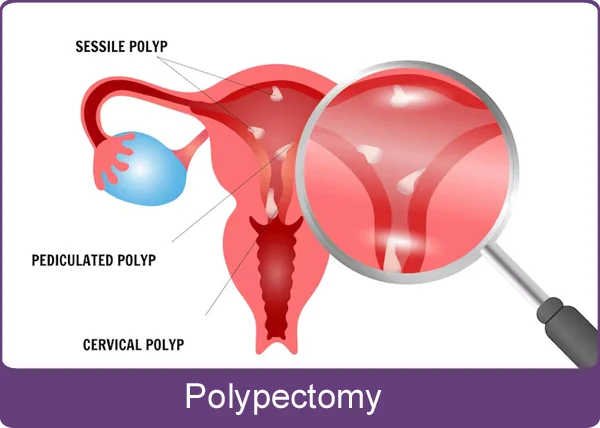
Polypectomy
Uterine polyps are growths that develop from the inner lining of the uterus, known as the endometrium. They are usually non-cancerous, but some may cause abnormal uterine bleeding, heavy periods, spotting between periods, or bleeding after menopause. In certain cases, uterine polyps may also be associated with fertility concerns.
Dr. Richa Arora Miglani, Minimally Invasive Gynaecological and Robotic Surgeon, provides individualized evaluation and treatment planning for women experiencing symptoms related to uterine polyps. With expertise in advanced hysteroscopy and minimally invasive gynaecological procedures, she assesses the size, number, and location of polyps before recommending appropriate management.
Polypectomy is a procedure to remove uterine polyps, often using hysteroscopy. This approach allows the doctor to examine the uterine cavity and remove suitable polyps through the cervix, usually without abdominal incisions.
If you are looking for Uterine Polyp Removal in Shalimar Bagh, a specialist consultation can help identify the cause of your symptoms and determine whether polypectomy is appropriate.
What Is Uterine Polypectomy?
Uterine polypectomy is a procedure in which one or more polyps are removed from the uterine lining. The procedure is commonly performed using a hysteroscope, a thin instrument with a camera that allows the surgeon to view the inside of the uterus.
During hysteroscopic polypectomy, specialized instruments are passed through the cervix to remove the polyp. The removed tissue is generally sent for laboratory examination to confirm its nature.
Polypectomy may be recommended for women with troublesome bleeding, polyps that persist, concerning clinical findings, or selected fertility-related concerns. Not every uterine polyp requires removal; the decision depends on symptoms, age, menopausal status, risk factors, and examination findings.
Common Symptoms of Uterine Polyps
Some uterine polyps do not cause symptoms and may be discovered during routine investigations. When symptoms occur, they may include:
-
Heavy menstrual bleeding: Periods that are heavier or longer than usual.
-
Irregular periods: Unpredictable bleeding or changes in menstrual patterns.
-
Bleeding between periods: Spotting or bleeding outside the usual menstrual cycle.
-
Bleeding after menopause: Any vaginal bleeding after menopause requires medical evaluation.
-
Difficulty conceiving: Polyps affecting the uterine cavity may be associated with fertility problems in some women.
-
Recurrent spotting: Light bleeding that occurs repeatedly without an obvious explanation.
These symptoms may also result from other gynaecological conditions. Proper assessment is important to establish the cause.
Causes and Risk Factors of Uterine Polyps
Uterine polyps develop when cells in the endometrial lining grow excessively in a localized area. Their exact cause is not always clear, but hormonal influences, particularly sensitivity to oestrogen, may contribute.
Factors associated with uterine polyps include:
-
Hormonal changes during the reproductive years.
-
Perimenopause and menopause.
-
Certain hormonal medications, including tamoxifen.
-
Increased body weight, which can influence hormonal balance.
-
A history of uterine polyps.
Having one or more risk factors does not necessarily mean a woman will develop polyps. A gynaecological evaluation helps determine whether further investigation or treatment is needed.
Diagnosis of Uterine Polyps
Accurate diagnosis helps determine the size and location of polyps and whether removal is appropriate.
1. Gynaecological Consultation
The doctor reviews menstrual patterns, bleeding symptoms, medical history, medications, and fertility goals.
2. Transvaginal Ultrasound
Transvaginal ultrasound provides images of the uterus and endometrial lining. It may identify a suspected polyp or other possible causes of abnormal bleeding.
3. Saline Infusion Sonography
In selected cases, fluid is introduced into the uterine cavity during ultrasound to improve visualization of the cavity and help identify polyps.
4. Diagnostic Hysteroscopy
A thin camera is passed through the cervix to directly examine the uterine cavity. Hysteroscopy can help confirm the presence, size, and location of a polyp and may allow treatment during the same procedure.
5. Endometrial Tissue Examination
Removed polyps are generally sent for histopathological examination. This helps determine whether the tissue is benign or contains abnormal changes requiring further management.
Types of Polypectomy and Treatment Options
The appropriate treatment depends on the polyp's characteristics, symptoms, and the patient's clinical needs.
1. Hysteroscopic Polypectomy
Hysteroscopic polypectomy is a commonly used method for removing uterine polyps. The hysteroscope is introduced through the vagina and cervix, allowing the surgeon to remove the polyp under direct visualization.
Because no abdominal incision is usually required, the procedure may involve less postoperative discomfort and a relatively short recovery period. The exact approach depends on the polyp's size, location, and number.
2. Diagnostic and Operative Hysteroscopy
Diagnostic hysteroscopy helps examine the uterine cavity, while operative hysteroscopy allows treatment of identified abnormalities, including polyps. In appropriate cases, diagnosis and removal can be performed during the same procedure.
3. Observation and Monitoring
Small, asymptomatic polyps may sometimes be monitored rather than removed. The decision depends on factors such as age, menopausal status, bleeding symptoms, risk factors, and ultrasound findings.
4. Additional Treatment for Abnormal Bleeding
If bleeding continues after polyp removal, further assessment may be needed to identify other causes. Medication or additional treatment may be recommended depending on the findings.
Benefits of Uterine Polyp Removal
When indicated, polypectomy may help:
-
Reduce abnormal bleeding associated with uterine polyps.
-
Address persistent spotting between periods.
-
Provide tissue for laboratory examination.
-
Improve assessment of the uterine cavity.
-
Support fertility evaluation in selected patients.
-
Treat a localized uterine growth without removing the uterus.
The outcome depends on the underlying condition. Polyps may recur, and removal does not guarantee improved fertility or resolve bleeding caused by other conditions.
Risks and Recovery After Polypectomy
Hysteroscopic polypectomy is generally well tolerated, but potential risks include bleeding, infection, uterine perforation, and complications related to anaesthesia or the fluid used during the procedure. The likelihood of complications depends on the procedure and the patient's individual circumstances.
Many patients return to routine activities relatively quickly, although recovery varies. Mild cramping or light spotting may occur after the procedure. The doctor will provide instructions about activity, hygiene, follow-up, and when to resume sexual activity.
Seek medical advice if you experience fever, worsening abdominal pain, foul-smelling discharge, or heavy bleeding after the procedure.
Why Choose Dr. Richa Arora Miglani?
Dr. Richa Arora Miglani specializes in minimally invasive gynaecological surgery, advanced hysteroscopy, laparoscopy, and robotic-assisted surgical procedures. Her approach focuses on evaluating each patient's symptoms and clinical findings before recommending appropriate treatment.
Women seeking Uterine Polyp Removal in Shalimar Bagh can receive guidance on diagnostic evaluation, hysteroscopic polypectomy, tissue examination, recovery expectations, and fertility-related considerations when relevant. Treatment recommendations are individualized according to each patient's needs.
When Should You Consult a Gynaecologist?
Consider a consultation if you experience heavy periods, repeated spotting between periods, irregular uterine bleeding, or a uterine polyp identified during an ultrasound examination.
Any bleeding after menopause should be evaluated promptly, even if it is light or occurs only once.
Seek urgent medical attention for very heavy bleeding accompanied by dizziness or fainting, or severe abdominal pain.
Early assessment can help determine whether observation, hysteroscopy, polypectomy, or another treatment is appropriate.
Frequently Asked Questions (FAQs)
1. What is uterine polypectomy?
Uterine polypectomy is a procedure to remove polyps from the lining of the uterus. It is commonly performed using hysteroscopy, which allows the surgeon to examine the uterine cavity and remove the polyp through the cervix.
2. Are uterine polyps cancerous?
Most uterine polyps are benign, but some may contain precancerous or cancerous changes. The risk varies according to factors such as age, menopausal status, bleeding symptoms, and medical history. Removed tissue is generally examined in a laboratory.
3. Is surgery necessary for every uterine polyp?
No. Some small polyps that do not cause symptoms may be monitored. Removal may be recommended for abnormal bleeding, concerning clinical findings, or selected fertility-related concerns.
4. Can uterine polypectomy improve fertility?
Removing a polyp that affects the uterine cavity may improve reproductive outcomes in selected patients. However, fertility depends on several factors, and polypectomy does not guarantee pregnancy.
5. How is hysteroscopic polypectomy performed?
A thin camera is passed through the vagina and cervix into the uterus. Specialized instruments are used to remove the polyp under direct visualization. An abdominal incision is usually not required.
6. How long does recovery take after uterine polyp removal?
Recovery is often relatively quick, but it depends on the procedure, anaesthesia, and individual health. Mild cramping or light spotting may occur temporarily. Follow your doctor's instructions regarding activity and follow-up.
7. Can uterine polyps return after removal?
Yes. New polyps may develop after treatment. If abnormal bleeding returns, a gynaecologist may recommend further assessment to determine whether a polyp has recurred or another condition is responsible.
8. How can I book an appointment for uterine polyp removal in Shalimar Bagh?
Contact the clinic to enquire about an appointment with Dr. Richa Arora Miglani. Bring any ultrasound reports, previous investigation results, and details of your bleeding pattern or other symptoms to the consultation.
Category : Polypectomy