
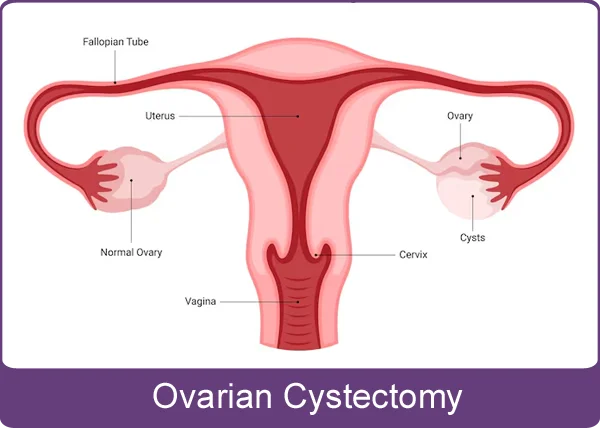
Ovarian Cystectomy
Ovarian cysts are fluid-filled sacs that develop on or inside the ovaries. Many ovarian cysts are harmless and disappear without treatment, but some may grow larger, cause pelvic pain, affect menstrual health, or require further investigation. When a cyst causes persistent symptoms or has concerning features, surgical removal may be recommended.
Dr. Richa Arora Miglani, Minimally Invasive Gynaecological and Robotic Surgeon, provides individualized evaluation and treatment planning for women with ovarian cysts. With expertise in advanced laparoscopy and minimally invasive gynaecological surgery, she assesses the cyst's size, appearance, symptoms, and potential impact on ovarian function before recommending an appropriate treatment approach.
Ovarian cystectomy is a surgical procedure that removes an ovarian cyst while preserving the ovary whenever medically possible. If you are looking for Ovarian Cystectomy in Shalimar Bagh, a specialist consultation can help determine whether monitoring, medication for associated symptoms, or surgery is appropriate for your condition.
What Is Ovarian Cystectomy?
Ovarian cystectomy is a surgical procedure performed to remove a cyst from an ovary while retaining as much healthy ovarian tissue as possible. It may be recommended for persistent, large, painful, or complex cysts, depending on the clinical findings.
The procedure differs from oophorectomy, which involves removing an entire ovary. When suitable, ovarian cystectomy aims to preserve ovarian function and may be particularly important for women who wish to maintain their reproductive potential.
The choice of treatment depends on the type of cyst, its size and location, the patient's age, symptoms, medical history, and future pregnancy plans.
Common Symptoms of Ovarian Cysts
Many ovarian cysts do not cause symptoms and are discovered during routine examinations or imaging. When symptoms occur, they may include:
-
Pelvic pain: Dull or sharp discomfort in the lower abdomen, sometimes on one side.
-
Abdominal bloating: A feeling of fullness or pressure in the abdomen.
-
Menstrual changes: Irregular periods or changes in menstrual patterns in some patients.
-
Pain during intercourse: Discomfort associated with pressure on the pelvic organs.
-
Frequent urination: Larger cysts may press against the bladder.
-
Difficulty with bowel movements: Pressure from a larger cyst may cause discomfort.
-
Persistent pelvic heaviness: A sensation of pressure in the lower abdomen.
These symptoms can have several causes, so medical evaluation is important before deciding on treatment.
Types of Ovarian Cysts That May Require Surgery
Different types of ovarian cysts require different management approaches. Surgery may be considered depending on symptoms, imaging findings, and the likelihood of complications.
1. Functional Ovarian Cysts
Functional cysts develop as part of the menstrual cycle. Many resolve naturally within a few menstrual cycles and do not require surgery. Monitoring may be recommended if the cyst persists or causes symptoms.
2. Endometriomas
Endometriomas are ovarian cysts associated with endometriosis. They may cause pelvic pain or fertility concerns. Treatment decisions require careful consideration because ovarian surgery can affect ovarian reserve.
3. Dermoid Cysts
Dermoid cysts, also called mature cystic teratomas, may contain different types of tissue. They do not usually disappear on their own, and surgery may be considered if they grow, cause symptoms, or pose a risk of complications such as ovarian torsion.
4. Cystadenomas
Cystadenomas are ovarian growths that may become large and cause pressure symptoms. Depending on their appearance, size, and other clinical factors, surgical removal may be recommended.
5. Persistent or Complex Ovarian Cysts
Cysts that persist, enlarge, cause ongoing symptoms, or have concerning features on imaging may require further evaluation and possible surgery. If malignancy is suspected, assessment by a gynaecological oncology specialist may be appropriate.
When Is Ovarian Cystectomy Recommended?
Ovarian cystectomy may be considered when:
-
An ovarian cyst causes persistent or significant pelvic pain.
-
The cyst continues to grow or does not resolve as expected.
-
The cyst has features that require further investigation.
-
There is a risk of complications, such as torsion or rupture.
-
The cyst affects nearby organs or causes pressure symptoms.
-
Surgical removal is considered appropriate after evaluating fertility goals and ovarian health.
Not every ovarian cyst requires surgery. Observation and follow-up imaging may be suitable for many benign cysts, depending on their appearance and the patient's age and symptoms.
Types of Ovarian Cystectomy Surgery
The surgical approach is selected according to the cyst's characteristics, the likelihood of malignancy, and the patient's individual medical needs.
1. Laparoscopic Ovarian Cystectomy
Laparoscopic ovarian cystectomy is a minimally invasive procedure performed through small abdominal incisions using a camera and specialized instruments. The surgeon separates and removes the cyst while preserving healthy ovarian tissue when possible.
Potential benefits include smaller incisions, less postoperative discomfort, and a shorter recovery period compared with open surgery for appropriately selected patients.
2. Open Ovarian Cystectomy
Open surgery involves an abdominal incision to access and remove the cyst. It may be considered for very large cysts, complex cases, or situations in which minimally invasive surgery is not the safest approach.
3. Fertility-Preserving Cystectomy
When appropriate, the surgeon aims to remove the cyst while retaining healthy ovarian tissue. This can be especially important for women who wish to conceive in the future.
The amount of ovarian tissue that can safely be preserved depends on the cyst's type, size, location, and relationship to normal ovarian tissue. Fertility preservation cannot be guaranteed in every case.
Diagnosis and Evaluation Before Ovarian Cystectomy
A detailed evaluation helps determine the type of cyst and whether surgery is necessary.
1. Gynaecological Consultation
The doctor reviews symptoms, menstrual history, medical conditions, previous surgeries, and fertility goals.
2. Pelvic Ultrasound
Ultrasound helps assess the cyst's size, structure, location, and appearance. These findings help determine whether observation or additional investigation is needed.
3. Additional Imaging
MRI or other imaging may be recommended when ultrasound findings are unclear or a more detailed assessment is required.
4. Blood Tests
Blood tests may be recommended to assess general health or investigate particular cysts. Tumour markers may be used in selected cases, but they cannot independently confirm or exclude ovarian cancer.
5. Surgical Planning
The doctor discusses the proposed procedure, possible alternatives, expected recovery, and the importance of preserving ovarian function when medically appropriate. If the cyst appears suspicious for cancer, specialist evaluation may be required before surgery.
Benefits of Ovarian Cystectomy
When clinically appropriate, ovarian cystectomy may help:
-
Remove a persistent or symptomatic ovarian cyst.
-
Relieve pelvic pain and pressure associated with the cyst.
-
Address certain cyst-related complications.
-
Preserve healthy ovarian tissue when possible.
-
Support individualized reproductive planning.
-
Provide tissue for laboratory examination when indicated.
The outcome depends on the type of cyst and the patient's clinical circumstances. Cysts may recur, and surgery does not guarantee improved fertility or eliminate every possible cause of pelvic pain.
Risks and Recovery After Ovarian Cystectomy
Like any surgical procedure, ovarian cystectomy carries potential risks, including bleeding, infection, injury to nearby organs, anaesthesia-related complications, and scar tissue formation. In some cases, surgery may reduce ovarian reserve or require removal of the affected ovary if preservation is not safe.
Recovery depends on the surgical approach and the extent of the procedure. Patients undergoing laparoscopic surgery often return to routine activities sooner than those undergoing open surgery, although individual recovery times vary.
After surgery, the doctor provides instructions regarding wound care, physical activity, pain management, and follow-up appointments. The removed cyst may be sent for laboratory examination to confirm its nature.
Why Choose Dr. Richa Arora Miglani?
Dr. Richa Arora Miglani specializes in minimally invasive gynaecological surgery, advanced laparoscopy, hysteroscopy, and robotic-assisted surgical techniques. Her approach focuses on evaluating each ovarian condition carefully and discussing suitable treatment options based on symptoms, imaging findings, and individual goals.
Women seeking Ovarian Cystectomy in Shalimar Bagh can receive guidance on ovarian cyst evaluation, minimally invasive surgery when suitable, recovery expectations, and fertility considerations. The treatment plan is individualized, with preservation of healthy ovarian tissue considered whenever clinically appropriate.
When Should You Consult a Gynaecologist?
Consider a consultation if you have a persistent ovarian cyst, recurring pelvic discomfort, abdominal bloating, or an ovarian mass identified during an ultrasound examination.
Seek urgent medical attention if you experience sudden, severe pelvic or abdominal pain, especially with nausea, vomiting, faintness, or fever. These symptoms may indicate ovarian torsion, cyst rupture, or another condition requiring prompt assessment.
Early evaluation helps determine whether monitoring, further investigations, or ovarian cystectomy may be appropriate.
Frequently Asked Questions (FAQs)
1. What is ovarian cystectomy?
Ovarian cystectomy is a surgical procedure that removes an ovarian cyst while preserving the ovary whenever possible. It may be recommended for certain persistent, painful, large, or complex cysts.
2. Is surgery necessary for every ovarian cyst?
No. Many ovarian cysts resolve naturally and only require observation or follow-up imaging. Surgery may be considered when a cyst persists, grows, causes significant symptoms, or has concerning features.
3. Is laparoscopic ovarian cystectomy safe?
Laparoscopic ovarian cystectomy is commonly used for suitable patients and may offer smaller incisions and a shorter recovery period. Its suitability depends on the cyst's characteristics and the patient's medical condition. All surgery carries potential risks that should be discussed with the surgeon.
4. Can ovarian cystectomy affect fertility?
Ovarian cystectomy may preserve the ability to conceive, but surgery can sometimes affect ovarian reserve, particularly when treating endometriomas or operating on both ovaries. The potential benefits and risks should be discussed before surgery if future pregnancy is important to you.
5. Can an ovarian cyst return after surgery?
Yes. Some types of ovarian cysts can recur, and new cysts may develop. The likelihood depends on the cyst type and the patient's circumstances. Follow-up may be recommended based on symptoms and clinical findings.
6. What is the difference between ovarian cystectomy and oophorectomy?
Ovarian cystectomy removes the cyst while preserving the ovary when possible. Oophorectomy involves removing one or both ovaries. The choice depends on the type of cyst, the condition of the ovarian tissue, and whether preserving the ovary is safe.
7. How long does recovery take after ovarian cystectomy?
Recovery varies depending on whether the procedure is laparoscopic or open and on the complexity of the surgery. Many patients undergoing laparoscopic surgery resume normal activities sooner than those having open surgery. The surgeon will provide individual recovery instructions.
8. How can I book an appointment for ovarian cystectomy in Shalimar Bagh?
Contact the clinic to enquire about an appointment with Dr. Richa Arora Miglani. Bring your ultrasound or MRI reports, previous treatment records, and a summary of your symptoms to help guide the consultation.
Category : Ovarian Cystectomy