Oophorectomy
Oophorectomy is a surgical procedure to remove one or both ovaries. The ovaries play an important role in reproductive health by releasing eggs and producing hormones such as oestrogen and progesterone. Oophorectomy may be recommended for certain ovarian conditions, including suspicious ovarian masses, selected ovarian cysts, ovarian torsion, or an increased risk of ovarian cancer.
Dr. Richa Arora Miglani, Minimally Invasive Gynaecological and Robotic Surgeon, provides individualized evaluation and surgical treatment planning for women with ovarian conditions. With expertise in advanced laparoscopy and minimally invasive gynaecological surgery, she assesses the underlying condition, symptoms, age, overall health, and reproductive goals before discussing appropriate treatment options.
If you are looking for Oophorectomy Surgery in Shalimar Bagh, a specialist consultation can help you understand whether ovary removal is necessary and which surgical approach may be suitable.
What Is Oophorectomy?
Oophorectomy is the surgical removal of an ovary or both ovaries. It may be performed to treat certain ovarian conditions or reduce cancer risk in carefully selected patients.
There are two main types:
-
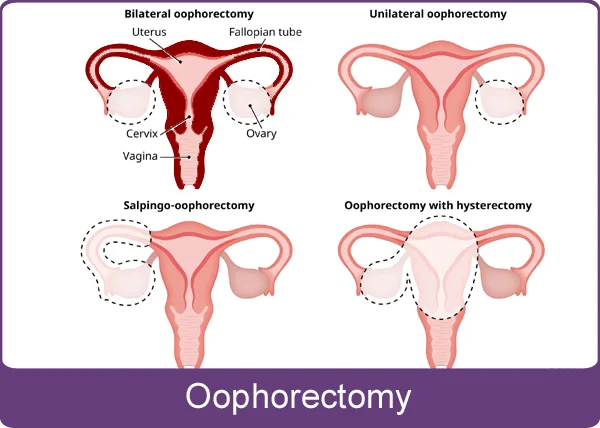
Unilateral Oophorectomy: Removal of one ovary. The remaining ovary may continue producing hormones and releasing eggs.
-
Bilateral Oophorectomy: Removal of both ovaries. In premenopausal women, this causes immediate surgical menopause because ovarian hormone production decreases significantly.
Oophorectomy may sometimes be performed alongside other procedures, such as fallopian tube removal or hysterectomy, depending on the medical indication. Removing an ovary is not always necessary when treating an ovarian cyst or other ovarian problem; preserving healthy ovarian tissue may be possible in selected cases.
Conditions That May Require Oophorectomy
Oophorectomy may be considered for several ovarian conditions, depending on their severity and individual circumstances.
1. Ovarian Tumours or Suspicious Masses
Some ovarian masses require surgical assessment because of their size, appearance, symptoms, or potential risk of malignancy. The extent of surgery depends on the findings and whether cancer is suspected or confirmed.
2. Complex Ovarian Cysts
Certain large, persistent, or complex ovarian cysts may require surgery. When medically appropriate, ovarian cystectomy—which removes the cyst while preserving the ovary—may be preferred over removing the entire ovary.
3. Ovarian Torsion
Ovarian torsion occurs when an ovary twists around its supporting tissues, potentially reducing its blood supply. It is a medical emergency requiring prompt assessment. Surgery may untwist and preserve the ovary in many cases, but removal may be necessary if the ovary cannot be safely preserved.
4. Endometriosis and Endometriomas
Endometriosis can affect the ovaries and cause cysts known as endometriomas. Treatment may involve monitoring, medication, or surgery. Oophorectomy is generally considered selectively when other options are unsuitable or when there are additional clinical reasons, particularly because ovarian removal can affect hormones and fertility.
5. Increased Risk of Ovarian Cancer
Some women with specific inherited genetic variants or a strong relevant family history may be offered risk-reducing surgery after specialist counselling. The decision requires careful consideration of cancer risk, age, reproductive plans, and the consequences of early menopause.
6. Other Serious Ovarian Conditions
Oophorectomy may occasionally be required for severe ovarian damage, certain infections, or other conditions in which the ovary cannot be safely preserved. The decision is made according to the clinical situation.
Types of Oophorectomy Surgery
The surgical approach depends on the ovarian condition, the size of the mass, the possibility of malignancy, previous surgeries, and the patient's overall health.
1. Laparoscopic Oophorectomy
Laparoscopic oophorectomy is a minimally invasive procedure performed through small abdominal incisions using a camera and specialized instruments. The surgeon removes the affected ovary through an appropriate incision.
For suitable patients, laparoscopy may offer smaller incisions, less postoperative discomfort, and a shorter recovery period than open surgery. It may not be appropriate for every large or potentially cancerous ovarian mass.
2. Open Abdominal Oophorectomy
Open surgery involves an abdominal incision to access the ovaries. It may be recommended when a mass is very large, malignancy is suspected, or the surgeon determines that open access is safer or more appropriate.
3. Unilateral Oophorectomy
This procedure removes one ovary while leaving the other in place. If the remaining ovary is healthy, it may continue to produce hormones and release eggs. Fertility can remain possible, although the outcome depends on other reproductive factors.
4. Bilateral Oophorectomy
This procedure removes both ovaries. It may be required for certain medical conditions or considered for cancer risk reduction in selected patients. For women who have not reached natural menopause, the procedure causes immediate surgical menopause and requires a discussion of its long-term effects.
Diagnosis and Evaluation Before Oophorectomy
A thorough assessment helps establish the cause of the ovarian problem and determine whether ovary removal is appropriate.
1. Gynaecological Consultation
The doctor reviews symptoms, menstrual history, previous surgeries, family history, medical conditions, and fertility goals.
2. Pelvic Ultrasound
Ultrasound helps assess the ovaries, cysts, and other pelvic structures. It can provide information about the size and appearance of an ovarian mass.
3. Additional Imaging
MRI or CT scans may be recommended in selected cases when more detailed assessment is needed or a suspicious mass requires further evaluation.
4. Blood Tests
Blood tests may be advised to assess general health or investigate a particular ovarian mass. Tumour markers may be considered when clinically appropriate, but they cannot independently confirm or exclude ovarian cancer.
5. Surgical Planning
The doctor discusses the proposed procedure, potential alternatives, expected recovery, and whether ovarian preservation is possible. If cancer is suspected, referral to a gynaecological oncology specialist may be necessary.
Benefits and Considerations of Oophorectomy
When medically indicated, oophorectomy may help:
-
Treat certain serious ovarian conditions.
-
Remove an ovarian mass that requires surgical treatment.
-
Address selected cases of severe ovarian damage or disease.
-
Reduce ovarian cancer risk in appropriately selected high-risk patients.
-
Provide definitive treatment when preservation of the affected ovary is not safe or feasible.
The potential benefits must be balanced against the risks, which include bleeding, infection, injury to nearby organs, blood clots, and anaesthesia-related complications.
Removal of both ovaries before natural menopause can cause hot flashes, night sweats, vaginal dryness, changes in sexual function, and bone-health concerns. It may also affect long-term health. Hormone therapy may be appropriate for some patients, depending on their medical history and the reason for surgery.
Recovery After Oophorectomy
Recovery varies according to the surgical approach, the reason for surgery, and the patient's overall health.
After laparoscopic surgery, many patients resume light activities sooner than after open surgery. Full recovery can still take several weeks, and the surgeon will provide individual instructions about activity, wound care, medication, and follow-up.
After bilateral oophorectomy in a premenopausal woman, additional support may be needed to manage surgical menopause and discuss hormone therapy, bone health, cardiovascular health, and sexual well-being.
Patients should seek medical attention for fever, worsening abdominal pain, heavy bleeding, wound problems, or other concerning symptoms after surgery.
Why Choose Dr. Richa Arora Miglani?
Dr. Richa Arora Miglani specializes in minimally invasive gynaecological surgery, advanced laparoscopy, and robotic-assisted surgical procedures. Her approach focuses on assessing the ovarian condition, explaining treatment options, and considering the patient's reproductive and hormonal health.
Women seeking Oophorectomy Surgery in Shalimar Bagh can receive guidance on ovarian cysts and masses, minimally invasive surgical options when suitable, recovery expectations, and the potential implications of removing one or both ovaries. Treatment decisions are individualized, with ovarian preservation considered whenever clinically appropriate.
When Should You Consult a Gynaecologist?
Consider a consultation if you have a persistent ovarian cyst, an ovarian mass requiring assessment, recurring pelvic discomfort, or concerns about an ovarian condition identified on imaging.
Seek urgent medical attention if you experience sudden, severe pelvic pain, particularly with nausea or vomiting, as this may indicate ovarian torsion or another emergency.
Early evaluation helps determine whether observation, ovarian cyst removal, oophorectomy, or another treatment approach is most appropriate.
Frequently Asked Questions (FAQs)
1. What is oophorectomy surgery?
Oophorectomy is an operation to remove one or both ovaries. It may be recommended for selected ovarian cysts or tumours, severe ovarian damage, certain cases of endometriosis, or cancer risk reduction in appropriately selected patients.
2. Can an ovary be removed without removing the uterus?
Yes. Oophorectomy can be performed while leaving the uterus in place. The need for additional procedures depends on the underlying condition and the treatment plan.
3. What is the difference between unilateral and bilateral oophorectomy?
Unilateral oophorectomy removes one ovary, while bilateral oophorectomy removes both. When one healthy ovary remains, it may continue producing hormones and releasing eggs. Removing both ovaries before natural menopause causes surgical menopause.
4. Can I get pregnant after an oophorectomy?
Pregnancy may remain possible after removal of one ovary if the remaining ovary, fallopian tube, uterus, and other fertility factors are suitable. Removing both ovaries means that eggs can no longer be released naturally; pregnancy options may depend on whether previously stored eggs or embryos, or donor eggs, are available and whether the uterus remains suitable for pregnancy.
5. Is laparoscopic oophorectomy safe?
Laparoscopic oophorectomy is commonly used for suitable patients and may offer smaller incisions and a shorter recovery period. Its suitability depends on the ovarian condition, mass characteristics, and the possibility of malignancy. All surgery carries potential risks, which should be discussed before the procedure.
6. What happens if both ovaries are removed?
If both ovaries are removed before natural menopause, ovarian hormone levels decrease sharply, causing surgical menopause. Symptoms and longer-term health considerations should be discussed with the doctor, including whether hormone therapy may be appropriate.
7. Is oophorectomy always necessary for an ovarian cyst?
No. Many ovarian cysts can be monitored, and some can be treated with ovarian cystectomy, which removes the cyst while preserving the ovary. Oophorectomy is considered when the clinical findings indicate that removing the ovary is necessary or safer.
8. How can I book an appointment for oophorectomy surgery in Shalimar Bagh?
Contact the clinic to enquire about an appointment with Dr. Richa Arora Miglani. Bring any ultrasound or MRI reports, previous treatment records, and a list of symptoms or concerns to help guide the consultation.
Category : Oophorectomy