
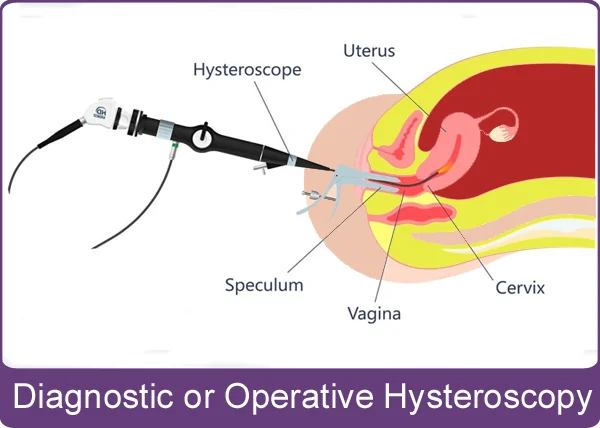
Diagnostic or Operative Hysteroscopy in Shalimar Bagh
Diagnostic and operative hysteroscopy are minimally invasive gynaecological procedures used to examine the inside of the uterus and diagnose or treat conditions affecting the uterine cavity. These procedures involve inserting a thin instrument called a hysteroscope through the vagina and cervix, allowing the surgeon to view the uterine cavity without making abdominal incisions.
If you are looking for Diagnostic/Operative Hysteroscopy in Shalimar Bagh, Dr. Richa Arora Miglani offers specialized gynaecological evaluation and surgical care. Hysteroscopy may help investigate abnormal uterine bleeding, identify uterine polyps, assess certain causes of infertility, and treat selected abnormalities inside the uterus.
What Is Diagnostic Hysteroscopy?
Diagnostic hysteroscopy is a procedure used to examine the uterine cavity and identify abnormalities that may be responsible for a patient's symptoms. A thin telescope-like instrument with a light and camera is gently passed through the cervix to provide a clear view of the uterine lining.
It may be recommended for women experiencing:
-
Heavy or irregular menstrual bleeding
-
Bleeding between periods
-
Suspected uterine polyps or submucosal fibroids
-
Selected fertility-related concerns
-
Recurrent pregnancy loss when a uterine abnormality is suspected
-
Suspected adhesions or structural abnormalities inside the uterus
The findings help the gynaecologist determine whether further investigation or treatment is needed.
What Is Operative Hysteroscopy?
Operative hysteroscopy is performed to treat certain abnormalities identified within the uterine cavity. Specialized instruments are passed through the hysteroscope to remove or correct the affected tissue without requiring an abdominal incision.
Depending on the diagnosis, operative hysteroscopy may be used for:
-
Removal of uterine polyps
-
Treatment of selected submucosal fibroids
-
Division of intrauterine adhesions
-
Removal of certain retained pregnancy tissue
-
Treatment of selected uterine cavity abnormalities
-
Assessment and treatment of certain structural problems affecting fertility
The suitability of operative hysteroscopy depends on the size, location, and nature of the abnormality.
Diagnostic vs Operative Hysteroscopy
|
Feature |
Diagnostic Hysteroscopy |
Operative Hysteroscopy |
|---|---|---|
|
Primary purpose |
Examine the uterine cavity |
Treat identified abnormalities |
|
Procedure |
Visual examination |
Surgical treatment using specialized instruments |
|
Common uses |
Investigating abnormal bleeding and suspected uterine abnormalities |
Removing polyps, treating selected fibroids, or dividing adhesions |
|
Anaesthesia |
May not be required in every case |
Depends on the procedure and patient |
|
Recovery |
Often relatively quick |
Depends on the treatment performed |
Both procedures are tailored to the patient's symptoms, diagnosis, and treatment requirements.
Conditions Treated With Hysteroscopy
1. Uterine Polyps
Uterine polyps are growths that develop from the lining of the uterus. They may cause irregular bleeding, heavy periods, or bleeding after menopause. Hysteroscopy allows direct visualization and, when appropriate, removal of polyps.
2. Submucosal Fibroids
Submucosal fibroids develop close to or project into the uterine cavity. Selected fibroids can be removed through operative hysteroscopy, depending on their size, number, and location.
3. Intrauterine Adhesions
Adhesions are bands of scar tissue that develop inside the uterine cavity. Hysteroscopy may be used to identify and carefully divide these adhesions when treatment is indicated.
4. Abnormal Uterine Bleeding
Hysteroscopy can help identify structural causes of abnormal bleeding, including polyps and certain fibroids. Additional investigations may be required depending on the patient's age, symptoms, and medical history.
5. Fertility-Related Uterine Abnormalities
Certain uterine cavity abnormalities may affect implantation or pregnancy outcomes. Hysteroscopy can help assess and treat selected abnormalities when clinically indicated.
How Is Hysteroscopy Performed?
The procedure generally involves the following steps:
1. Initial Consultation: The gynaecologist reviews symptoms, menstrual history, medical background, and previous investigations.
2. Pre-Procedure Assessment: Ultrasound or other investigations may be recommended to understand the uterine cavity and plan treatment.
3. Hysteroscope Insertion: A thin instrument is passed through the vagina and cervix into the uterus. Fluid may be used to gently expand the cavity for better visualization.
4. Diagnosis or Treatment: The surgeon examines the uterine lining or uses specialized instruments to treat the identified abnormality.
5. Recovery and Follow-Up: The patient receives instructions on managing mild cramps, spotting, activity restrictions, and follow-up care.
The procedure may be performed in an outpatient or operating-room setting, depending on its complexity and the patient's needs.
Benefits of Diagnostic and Operative Hysteroscopy
When appropriate, hysteroscopy offers several advantages:
-
Direct visualization of the uterine cavity
-
Accurate assessment of certain uterine abnormalities
-
Treatment of selected conditions without abdominal incisions
-
Potentially shorter recovery compared with more invasive surgery
-
Ability to combine diagnosis and treatment in selected cases
-
Support for individualized treatment planning
As with any procedure, hysteroscopy carries potential risks, including bleeding, infection, uterine perforation, and complications related to the fluid used during surgery. The level of risk depends on the procedure and individual circumstances.
Recovery After Hysteroscopy
Recovery depends on whether the procedure is diagnostic or operative and on the extent of treatment performed.
After hysteroscopy, some patients may experience mild cramping or light vaginal spotting for a short period. Your surgeon will advise when you can resume work, exercise, and other normal activities.
General recovery guidance includes:
-
Follow the prescribed medication and aftercare instructions.
-
Avoid strenuous activity for the period recommended by your surgeon.
-
Follow advice regarding vaginal intercourse, tampons, and swimming.
-
Attend follow-up appointments if scheduled.
-
Seek medical attention for fever, severe abdominal pain, heavy bleeding, or foul-smelling discharge.
Why Choose Dr. Richa Arora Miglani?
Dr. Richa Arora Miglani is a Minimally Invasive Gynaecological and Robotic Surgeon with over 25 years of experience, according to her professional profile. Her expertise includes advanced laparoscopy, hysteroscopy, and the surgical management of various gynaecological conditions.
Patients seeking Diagnostic/Operative Hysteroscopy in Shalimar Bagh can consult her for an individualized assessment and guidance on appropriate diagnostic and treatment options.
-
Specialized Gynaecological Expertise: Experience in managing a range of uterine and reproductive health conditions.
-
Individualized Evaluation: Assessment based on symptoms, medical history, and investigation findings.
-
Minimally Invasive Options: Consideration of hysteroscopic procedures when clinically appropriate.
-
Patient-Focused Guidance: Clear explanations of the procedure, potential risks, and expected recovery.
-
Follow-Up Care: Guidance on postoperative recovery and further treatment when required.
Book a Hysteroscopy Consultation in Shalimar Bagh
If you are experiencing abnormal uterine bleeding, heavy periods, or other symptoms that may indicate a uterine cavity abnormality, a specialist consultation can help determine the cause.
Consult Dr. Richa Arora Miglani to discuss whether diagnostic or operative hysteroscopy is appropriate for your condition. Treatment recommendations depend on your symptoms, investigation findings, and individual health needs.
Frequently Asked Questions
1. What Is Diagnostic Hysteroscopy Used For?
Diagnostic hysteroscopy examines the inside of the uterus to identify abnormalities such as uterine polyps, certain fibroids, adhesions, or other structural problems that may cause abnormal bleeding or fertility-related concerns.
2. What Is the Difference Between Diagnostic and Operative Hysteroscopy?
Diagnostic hysteroscopy is used to examine the uterine cavity, while operative hysteroscopy allows the surgeon to treat certain abnormalities, such as removing polyps or selected fibroids, during the procedure.
3. Is Hysteroscopy a Major Surgery?
Diagnostic hysteroscopy is usually a minor procedure. Operative hysteroscopy varies in complexity depending on the condition being treated. Many procedures do not require abdominal incisions, although anaesthesia and an operating-room setting may be needed.
4. Is Hysteroscopy Painful?
Some patients experience mild cramping or discomfort, particularly during diagnostic hysteroscopy. The level of discomfort varies, and pain relief or anaesthesia may be offered depending on the procedure and individual needs.
5. How Long Does It Take to Recover After Hysteroscopy?
Many patients resume routine activities quickly after diagnostic hysteroscopy. Recovery after operative hysteroscopy depends on the treatment performed. Your surgeon will provide specific instructions based on your procedure.
6. Can Hysteroscopy Help With Fertility Problems?
Hysteroscopy may identify and treat certain uterine cavity abnormalities, such as polyps, adhesions, or selected fibroids, that can affect reproductive outcomes. It is not necessary for every patient experiencing infertility.
7. Where Can I Get Diagnostic/Operative Hysteroscopy in Shalimar Bagh?
You can contact Dr. Richa Arora Miglani's clinic through its official website or available appointment details to schedule a consultation and discuss your symptoms and treatment options.
Category : Diagnostic or Operative Hysteroscopy