
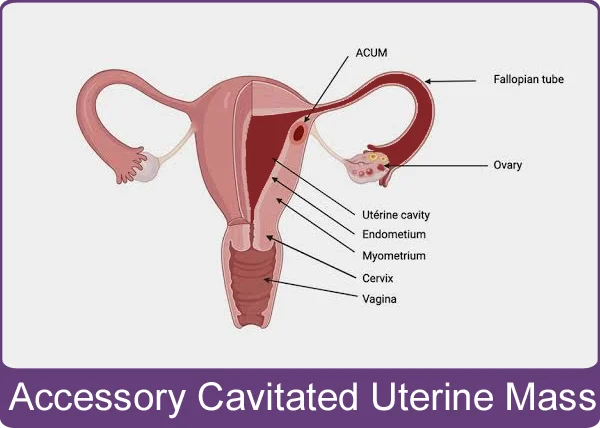
Accessory Cavitated Uterine Mass
Accessory Cavitated Uterine Mass (ACUM) is a rare, non-cancerous gynaecological condition characterized by a small cavity within the uterine muscle, separate from the main uterine cavity. This cavity may contain menstrual-like blood and can cause severe menstrual cramps, recurring pelvic pain, and discomfort, particularly in adolescents and young women.
Early diagnosis and appropriate treatment can help manage symptoms and improve quality of life. If you are looking for Accessory Cavitated Uterine Mass Treatment in Shalimar Bagh, Dr. Richa Arora Miglani provides specialized gynaecological evaluation and surgical care, including minimally invasive approaches when clinically appropriate.
What Is an Accessory Cavitated Uterine Mass?
An accessory cavitated uterine mass is an uncommon uterine abnormality that typically develops near the round ligament, close to the main uterine cavity. It contains a cavity lined with endometrial tissue, which responds to hormonal changes during the menstrual cycle.
Unlike the normal uterine cavity, the accessory cavity may not have an opening through which its contents can drain. As a result, menstrual-like blood can accumulate inside it, leading to cyclical pain and pressure.
ACUM is different from uterine fibroids, ovarian cysts, and certain congenital uterine abnormalities. Accurate diagnosis is important to ensure appropriate treatment.
Symptoms of Accessory Cavitated Uterine Mass
Symptoms may begin during adolescence or early adulthood and can vary in severity.
Common symptoms include:
-
Severe Menstrual Pain: Intense cramps that may worsen during menstruation.
-
Recurring Pelvic Pain: Pain in the lower abdomen that may follow a cyclical pattern.
-
Painful Periods: Dysmenorrhoea that may not respond adequately to routine pain medication.
-
Chronic Lower Abdominal Discomfort: Persistent or recurring discomfort around the pelvic region.
-
Pain During Daily Activities: Symptoms that interfere with school, work, exercise, or everyday routines.
Some patients may have few symptoms, while others experience significant discomfort. Persistent or severe pelvic pain should be evaluated by a qualified gynaecologist.
Causes and Risk Factors
The exact cause of ACUM is not fully established. It is generally considered a developmental abnormality involving the formation of uterine muscle and endometrial tissue during reproductive development.
The condition may be associated with:
-
Developmental differences in the uterine muscle.
-
A functional cavity containing endometrial tissue.
-
Hormonal changes that cause the cavity lining to bleed during menstruation.
ACUM is not considered a consequence of poor menstrual hygiene or a lifestyle choice. Specialist evaluation helps distinguish it from other conditions that may produce similar symptoms.
Diagnosis of Accessory Cavitated Uterine Mass
Accurate diagnosis is essential because ACUM can resemble other uterine or pelvic abnormalities.
1. Gynaecological Consultation
The evaluation begins with a review of menstrual history, pain patterns, symptoms, and previous treatment. A clinical examination may be recommended when appropriate.
2. Pelvic Ultrasound
Ultrasound can help identify a well-defined mass within or adjacent to the uterine muscle and determine whether it contains fluid or blood-like material.
3. Magnetic Resonance Imaging (MRI)
MRI may provide more detailed information about the mass, its relationship to the main uterine cavity, and surrounding pelvic structures. It can help distinguish ACUM from fibroids, adenomyosis, and other congenital abnormalities.
4. Individualized Diagnostic Assessment
The diagnosis is made by considering symptoms, imaging findings, and other possible causes of pelvic pain. Additional investigations may be recommended depending on the case.
Treatment Options for Accessory Cavitated Uterine Mass
Treatment depends on symptom severity, diagnostic findings, and the patient's reproductive goals.
1. Symptom Management
Medication may help relieve menstrual pain in selected patients. However, medication does not remove the accessory cavity, and symptoms may persist or return.
2. Laparoscopic Excision
Laparoscopic removal of the accessory mass may be considered for patients with significant symptoms and a confirmed diagnosis. The procedure uses small abdominal incisions and specialized instruments to remove the abnormal cavity.
3. Fertility-Conscious Surgical Planning
Because ACUM commonly affects younger women, preserving the healthy uterus and surrounding reproductive structures is an important consideration. The surgical plan depends on the location of the mass and its relationship to the uterine muscle.
4. Follow-Up Care
After treatment, follow-up appointments help assess recovery, symptom improvement, and any further care required.
The choice of treatment should be made after a detailed specialist consultation. Surgery is not necessary for every patient, and the expected benefits and risks should be discussed before proceeding.
Laparoscopic Surgery for ACUM
Laparoscopic surgery may be suitable when the accessory mass causes significant pain or other persistent symptoms. During the procedure, the surgeon accesses the pelvic area through small incisions and removes the abnormal cavity while aiming to preserve the surrounding healthy uterine tissue.
Potential benefits of a minimally invasive approach may include:
-
Smaller surgical incisions.
-
Less postoperative discomfort in suitable cases.
-
Shorter hospital stay.
-
Earlier return to routine activities.
-
The possibility of preserving healthy uterine tissue.
These benefits depend on the individual case and surgical complexity. The procedure also carries risks, including bleeding, infection, injury to nearby organs, and scarring. A surgeon should explain the specific risks and expected recovery before treatment.
Why Choose Dr. Richa Arora Miglani?
Dr. Richa Arora Miglani is a Minimally Invasive Gynaecological and Robotic Surgeon with over 25 years of experience, according to her professional profile. Her expertise includes advanced laparoscopy, hysteroscopy, and the surgical management of complex gynaecological conditions.
Patients seeking Accessory Cavitated Uterine Mass Treatment in Shalimar Bagh can consult her for a detailed assessment and discussion of suitable treatment options.
-
Specialized Surgical Expertise: Experience in minimally invasive gynaecological procedures.
-
Detailed Evaluation: Assessment of symptoms and imaging findings to support accurate diagnosis.
-
Personalized Treatment Planning: Recommendations based on symptom severity and individual health needs.
-
Fertility-Conscious Approach: Consideration of uterine preservation where medically appropriate.
-
Recovery Guidance: Advice on postoperative care and follow-up requirements.
When Should You Consult a Gynaecologist?
Consider a specialist consultation if you experience severe menstrual cramps, recurring pelvic pain, or pain that does not improve with routine treatment.
Seek urgent medical care if pelvic pain is sudden or severe, particularly when accompanied by fever, fainting, vomiting, or heavy bleeding, as these symptoms may indicate another condition requiring prompt attention.
If you are looking for Accessory Cavitated Uterine Mass Treatment in Shalimar Bagh, arrange a consultation to discuss your symptoms, diagnostic investigations, and potential treatment options.
Frequently Asked Questions
1. What Is an Accessory Cavitated Uterine Mass?
An accessory cavitated uterine mass is a rare, usually benign uterine abnormality containing a cavity lined with endometrial tissue. It may collect menstrual-like blood and cause recurring pelvic pain or severe menstrual cramps.
2. What Are the Common Symptoms of ACUM?
Common symptoms include severe menstrual cramps, recurring lower abdominal pain, and cyclical pelvic discomfort. Symptoms often begin during adolescence or early adulthood, although severity varies between patients.
3. How Is Accessory Cavitated Uterine Mass Diagnosed?
Diagnosis typically involves a gynaecological consultation and pelvic imaging. Ultrasound and MRI can help identify the mass and distinguish it from fibroids, adenomyosis, ovarian cysts, and other pelvic conditions.
4. Can ACUM Be Treated With Laparoscopic Surgery?
Yes. Laparoscopic excision may be recommended for symptomatic patients when the diagnosis is confirmed. The procedure aims to remove the abnormal cavity while preserving healthy uterine tissue whenever feasible.
5. Can Accessory Cavitated Uterine Mass Affect Fertility?
The effect on fertility is not fully established and may depend on the location of the mass and associated abnormalities. Individual assessment and fertility-conscious treatment planning are important for women who wish to conceive.
6. Is Surgery Always Necessary for ACUM?
No. Treatment depends on symptoms, diagnostic findings, and individual circumstances. Some patients may be managed with medication and monitoring, while surgery may be considered for persistent or severe symptoms.
7. Where Can I Get Accessory Cavitated Uterine Mass Treatment in Shalimar Bagh?
You can contact Dr. Richa Arora Miglani's clinic through its official website or appointment details to arrange a consultation and discuss diagnostic and treatment options.
Category : Accessory Cavitated Uterine Mass