
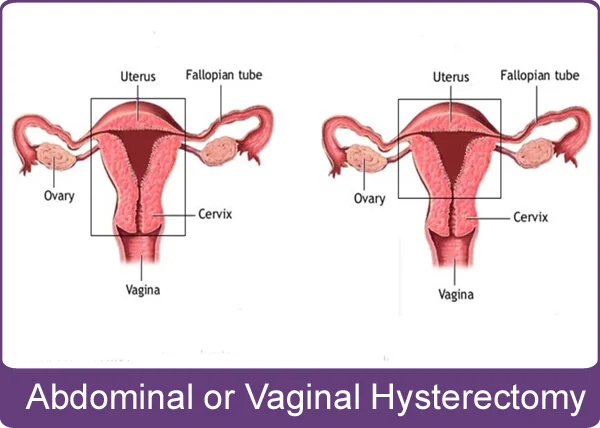
Abdominal or Vaginal Hysterectomy
Abdominal and vaginal hysterectomy are surgical procedures used to remove the uterus for the treatment of various gynaecological conditions. The choice of procedure depends on the patient's medical condition, uterine size, pelvic anatomy, previous surgeries, and overall health.
Dr. Richa Arora Miglani, a Minimally Invasive Gynaecological and Robotic Surgeon, provides specialized evaluation and surgical care for women requiring hysterectomy. If you are looking for Abdominal/Vaginal Hysterectomy in Shalimar Bagh, a consultation can help you understand the available surgical options, expected recovery, and potential risks.
What Is Abdominal Hysterectomy?
Abdominal hysterectomy is a surgical procedure in which the uterus is removed through an incision in the lower abdomen. It may be recommended when the uterus is significantly enlarged, fibroids are extensive, or the patient's condition requires an abdominal surgical approach.
This procedure may be considered for conditions such as:
-
Large or multiple uterine fibroids
-
Adenomyosis causing persistent symptoms
-
Certain cases of abnormal uterine bleeding
-
Selected cases of endometriosis
-
Certain gynaecological cancers, when indicated
The surgeon evaluates each case to determine whether abdominal hysterectomy is the most appropriate treatment.
What Is Vaginal Hysterectomy?
Vaginal hysterectomy involves removing the uterus through the vagina without making an external abdominal incision. It may be suitable for women with uterine prolapse and certain benign uterine conditions.
Potential benefits may include:
-
No external abdominal incision
-
Less postoperative discomfort in suitable cases
-
Shorter hospital stay for many patients
-
Faster recovery compared with open abdominal surgery in appropriate cases
The suitability of vaginal hysterectomy depends on factors such as uterine mobility, pelvic anatomy, the underlying diagnosis, and previous surgical history.
Abdominal vs Vaginal Hysterectomy
Both procedures remove the uterus, but they differ in their surgical approach.
|
Feature |
Abdominal Hysterectomy |
Vaginal Hysterectomy |
|---|---|---|
|
Surgical approach |
Through an abdominal incision |
Through the vagina |
|
External incision |
Required |
Usually not required |
|
Common considerations |
Large uterus or complex cases |
Suitable benign conditions and uterine prolapse |
|
Recovery |
Generally longer |
Often shorter |
|
Suitability |
Depends on diagnosis and complexity |
Depends on anatomy and clinical findings |
The most suitable procedure is determined after a detailed gynaecological examination and review of relevant investigations.
Conditions That May Require Hysterectomy
Hysterectomy may be recommended when symptoms significantly affect quality of life or when surgery is medically necessary.
1. Uterine Fibroids
Fibroids are non-cancerous growths in the uterus that may cause heavy menstrual bleeding, pelvic pressure, pain, or abdominal enlargement.
2. Adenomyosis
Adenomyosis occurs when tissue similar to the uterine lining grows into the muscular wall of the uterus. It may cause painful periods, heavy bleeding, and pelvic discomfort.
3. Persistent Abnormal Uterine Bleeding
Women experiencing ongoing heavy or abnormal bleeding may require further evaluation. Hysterectomy may be considered when other treatments are ineffective or unsuitable.
4. Uterine Prolapse
Uterine prolapse occurs when the uterus descends into the vaginal canal because of weakened pelvic support. Vaginal hysterectomy may be considered in selected cases, sometimes alongside pelvic floor repair.
5. Selected Gynaecological Cancers
Hysterectomy may form part of the treatment plan for certain cancers affecting the uterus or cervix. The recommended procedure depends on the cancer type and stage.
How Is the Procedure Performed?
The treatment process generally involves the following steps.
1. Initial Consultation: The surgeon reviews symptoms, medical history, previous treatments, and reproductive goals.
2. Diagnostic Evaluation: Investigations may include pelvic ultrasound, blood tests, cervical screening, or endometrial assessment, depending on the clinical indication.
3. Surgical Planning: The surgeon discusses the recommended approach, anaesthesia, potential risks, alternatives, and recovery expectations.
4. Surgical Procedure: The uterus is removed through the abdominal or vaginal route under appropriate anaesthesia.
5. Postoperative Care: The patient receives instructions regarding medication, wound care where applicable, activity restrictions, and follow-up appointments.
Recovery After Abdominal or Vaginal Hysterectomy
Recovery varies according to the surgical approach, the complexity of the procedure, and the patient's general health. Abdominal hysterectomy often requires a longer recovery period than vaginal hysterectomy.
During recovery, patients should:
-
Follow the surgeon's medication and postoperative instructions.
-
Avoid heavy lifting and strenuous activities until cleared.
-
Attend scheduled follow-up appointments.
-
Follow medical advice about returning to work and routine activities.
-
Avoid vaginal intercourse until the surgeon confirms healing is adequate.
Seek medical attention for fever, heavy bleeding, worsening abdominal pain, foul-smelling discharge, or other concerning symptoms.
Why Choose Dr. Richa Arora Miglani?
Dr. Richa Arora Miglani specializes in minimally invasive gynaecological and robotic surgery, with experience in managing a range of complex gynaecological conditions.
Women seeking Abdominal/Vaginal Hysterectomy in Shalimar Bagh can consult her for an individualized assessment and guidance on suitable treatment options.
-
Specialized Surgical Expertise: Experience in different hysterectomy approaches and advanced gynaecological procedures.
-
Individualized Treatment Planning: Recommendations based on diagnosis, symptoms, and personal health needs.
-
Comprehensive Evaluation: Assessment of medical history, investigations, and available treatment alternatives.
-
Clear Communication: Discussion of surgical benefits, risks, and expected recovery.
-
Postoperative Guidance: Support with recovery instructions and follow-up care.
Book a Consultation in Shalimar Bagh
If you are experiencing persistent menstrual bleeding, uterine fibroids, pelvic discomfort, or uterine prolapse, a specialist consultation can help identify the underlying cause and appropriate treatment options.
Consult Dr. Richa Arora Miglani to discuss whether abdominal hysterectomy, vaginal hysterectomy, or an alternative treatment is suitable for your condition.
Frequently Asked Questions
1. What Is the Difference Between Abdominal and Vaginal Hysterectomy?
Abdominal hysterectomy removes the uterus through an incision in the abdomen, while vaginal hysterectomy removes it through the vagina without an external abdominal incision. The appropriate approach depends on the patient's condition and anatomy.
2. Which Hysterectomy Procedure Is Better?
Neither procedure is best for every patient. Vaginal hysterectomy may offer a shorter recovery for suitable patients, while abdominal hysterectomy may be necessary for certain complex conditions. The surgeon recommends an approach after evaluation.
3. How Long Does Recovery Take After Hysterectomy?
Recovery depends on the procedure and individual health. Vaginal hysterectomy often allows a quicker recovery than open abdominal surgery, while abdominal hysterectomy may require several weeks of healing.
4. Is Hysterectomy Always Necessary for Uterine Fibroids?
No. Many fibroids can be managed with medication, monitoring, or uterus-preserving procedures such as myomectomy. Hysterectomy may be considered when symptoms are severe or other options are unsuitable.
5. Can the Ovaries Be Preserved During Hysterectomy?
Yes. The ovaries can often be preserved if they are healthy and there is no medical reason to remove them. The decision depends on the patient's condition, age, risk factors, and treatment goals.
6. Where Can I Consult a Specialist for Abdominal/Vaginal Hysterectomy in Shalimar Bagh?
You can contact Dr. Richa Arora Miglani's clinic through the official website or available appointment details to discuss your symptoms and arrange a consultation.
Category : Abdominal or Vaginal Hysterectomy